Proudly Canadian

 When you think about bone health, osteoporosis may be the condition that comes to mind. Osteoporosis is a condition that causes bones to become thinner, weaker, and more fragile. As bone density decreases, even everyday movements or minor falls can sometimes lead to a fracture. Osteoporosis often develops gradually, without noticeable symptoms, which is why it is sometimes called a “silent” condition. A diagnosis of osteoporosis can change the way your body responds to a fracture. When bones are more fragile, a break may take longer to heal and may need a little more support along the way.
If you or someone you love is recovering from a fracture while living with osteoporosis, you may have questions about what to expect. Why is healing taking longer? Are there other factors that could be affecting recovery? And are there treatments that can help support the healing process?
Why Can Osteoporosis Make Fracture Healing More Difficult?
Our bones are constantly repairing and rebuilding themselves. With osteoporosis, bones become less dense and more fragile, which can make it harder for the body to repair a fracture. This can be especially important at the site of a broken bone. When there is less healthy bone tissue available to support the healing process, recovery may take longer than expected.
For some people, a fracture may heal more slowly than usual. This is sometimes called a delayed union. In other cases, the bone may have difficulty healing on its own, which is known as a non-union. A slower recovery does not mean the fracture cannot heal. It simply means that your healthcare team may want to monitor your progress more closely and consider additional options that can support your body’s natural healing process.
Other Factors That Can Affect Bone Healing
Osteoporosis is not always the only factor affecting how quickly a fracture heals. Other health conditions and lifestyle factors can also play a role. For example, diabetes can affect circulation and increase the risk of complications. Long-term steroid use can affect the body’s ability to build new bone, while smoking can reduce blood flow to healing tissues.
When several of these factors are present together, healing may take longer than expected. Understanding what may be affecting your recovery can help you and your healthcare team set realistic expectations and decide whether additional support could be helpful.
How Can Bone Stimulation Therapy Support Healing?
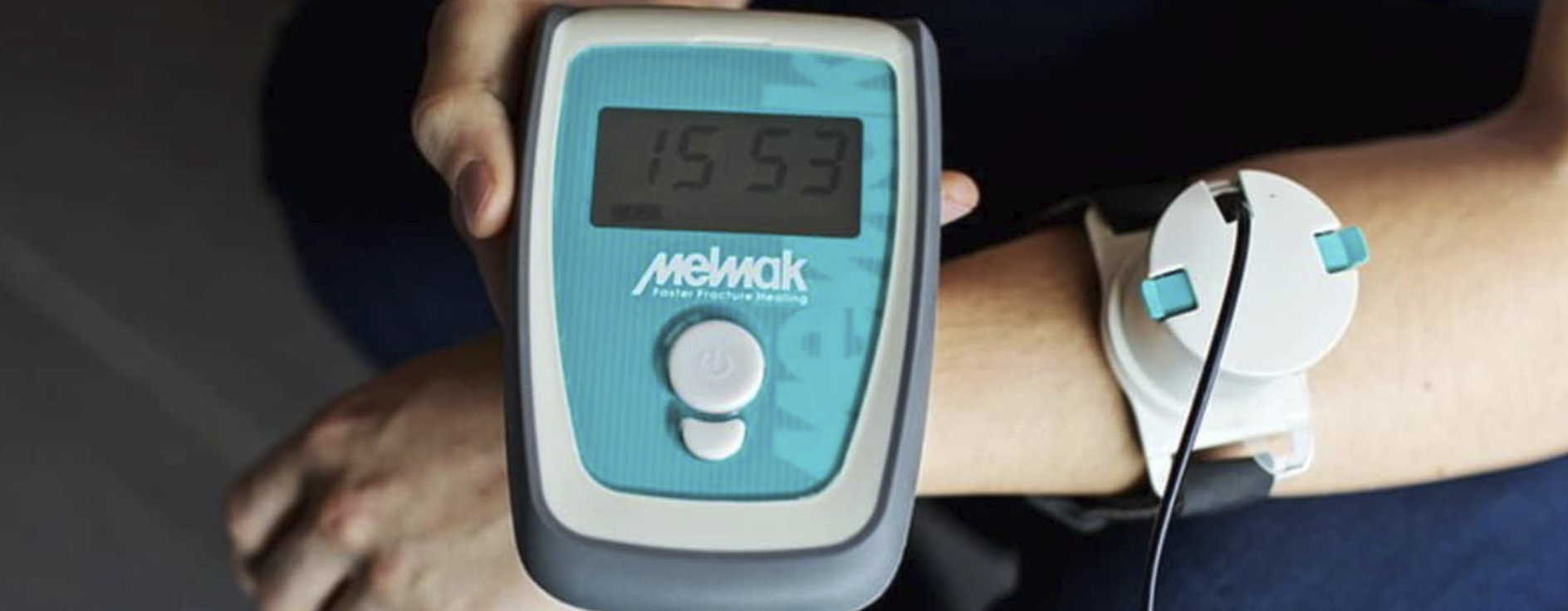
If a fracture is healing slowly, your healthcare provider may recommend Low Intensity Pulsed Ultrasound (LIPUS) bone stimulation therapy. This non-invasive treatment uses gentle ultrasound waves at the fracture site to support the body’s natural healing process.
The Melmak LIPUS device, distributed across Canada by Fracture Healing, is designed for at-home use and takes about 20 minutes a day. It may be considered for people with factors that can affect healing, including osteoporosis, diabetes, or long-term steroid use.
LIPUS is intended for certain fractures of the arms, legs, wrists, and similar areas. It is not intended for fractures of the skull, jaw, vertebrae, or spine.
Is a Bone Stimulator Covered by Insurance in Canada?
Fracture Healing ships the Melmak device across Canada, with free shipping on rentals and purchases.
Coverage varies by insurance provider and plan, but some Canadian extended health plans may cover part of the cost.
Not sure what your plan covers? Our team can help you understand your options. You can also learn more about bone stimulator insurance coverage in Canada.
Frequently Asked Questions
Does osteoporosis make fractures take longer to heal?
It can. Osteoporosis causes bones to become less dense and more fragile, which may make the healing process more difficult. Recovery times vary from person to person, but some people with osteoporosis may experience a longer healing process.
Can LIPUS therapy help with osteoporosis-related fractures?
LIPUS may be an option for some people with fractures that are healing slowly, including those with factors such as osteoporosis. It is used as an addition to standard fracture care and is not intended to replace your healthcare provider’s treatment plan.
What is a bone stimulator and how does it work?
A bone stimulator is a device designed to provide additional support during the bone-healing process. LIPUS bone stimulators use gentle ultrasound waves at the fracture site.
The Melmak device is used on the skin for approximately 20 minutes each day and can be used at home once you have been properly instructed.
Is a bone healing device covered by insurance in Canada?
Coverage depends on your insurance provider and individual plan. Some Canadian extended health plans provide reimbursement toward a bone stimulator.
If you’re unsure whether you’re covered, the Fracture Healing team can help you understand your options.
Who may be a candidate for bone stimulation therapy?
Bone stimulation may be considered for people with fresh, delayed, or non-union fractures, as well as people who have factors that may affect healing, such as osteoporosis, diabetes, or long-term steroid use.
Not every fracture is suitable for LIPUS. Fractures of the skull, jaw, vertebrae, and spine are excluded.
Wondering If Bone Stimulation Could Be Right for You?
If you’re living with osteoporosis and your fracture isn’t healing as quickly as expected, you don’t have to figure out your options on your own.Talk to the Fracture Healing Team to learn whether bone stimulation therapy may be an option for your recovery and get help understanding your rental, purchase, and insurance options across Canada.