Proudly Canadian


When you are living with a fracture, sleep can start to feel like a luxury. Pain, concerns about work or sport, and the discomfort of casts or braces can all make it harder to get quality sleep. At Fracture Healing, we speak with people every day who want to know how sleep can help with bone healing and may help you manage pain, maintain balance, and feel better throughout the day, which can be especially important for older adults.
Understanding sleep and bone healing
Bone healing is a complex, step-by-step process. Your body needs time and energy to repair a fracture, and a large part of that work happens quietly in the background while you rest. Many people notice that they feel more sore, tired, and discouraged when they are not sleeping well, which can make the recovery journey feel longer.
Sleep, pain, and nausea can be tightly linked after an injury or surgery. In elderly hip fracture patients, sleep disturbance, pain, and postoperative nausea and vomiting are described as interconnected issues that strongly influence recovery and overall outcomes.2 When one of these areas is not well controlled, the others may become harder to manage too.
This connection helps explain why rest and fracture recovery are often discussed together. When you sleep better, you may tolerate pain more easily, move more safely during the day, and feel more engaged with your rehabilitation plan.
How sleep may support fracture recovery
There are several factors that link sleep and bone healing:
- Pain control: Good sleep is associated with better pain tolerance. When pain is managed, you may find it easier to follow weight-bearing or movement instructions from your healthcare team, which can support safe fracture recovery.2
- Energy and balance: When you are rested, you are often steadier on your feet, which may help reduce the risk of falls and further injury. An important concern for older adults recovering from hip and other weight-bearing fractures.2
- Medication side effects: In hospital settings, nausea, sleep disturbance, and pain can interact in ways that slow recovery.2 Striving for stable, restful sleep may help you and your care team fine-tune medications and other strategies so that side effects are easier to handle.
All of this means that while sleep alone does not heal a fracture, prioritizing healthier sleep may help your body with bone healing, make the most of your overall treatment plan, and support you emotionally through the healing process.
Sleep challenges during fracture recovery
Many people recovering from fractures, especially hip or lower limb injuries, find night-time to be the hardest part of the day. Common challenges include:
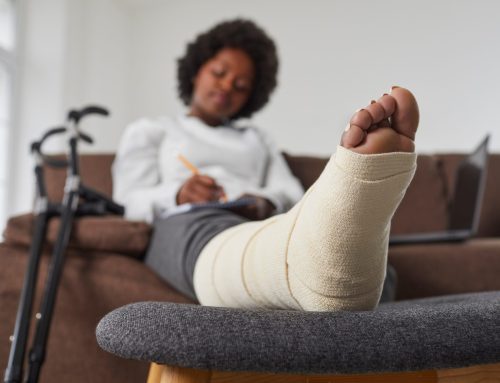
- Finding a comfortable position around a cast, brace, or surgical site
- Waking up due to sharp or throbbing pain when turning in bed
- Worrying about long-term mobility, return to work or sport, or independence
- Medication schedules that interrupt normal sleep patterns
For older adults, added factors such as osteoporosis, diabetes, or long-term steroid use can make healing slower and may already be affecting night-time breathing or comfort.1,2 In elderly hip fracture patients, sleep disturbance is a common concern, and addressing it alongside pain and nausea is important for smoother recovery.2
Practical fracture recovery tips for better sleep
Because sleep is connected to bone healing, focusing on rest can be a meaningful part of your fracture recovery plan. Simple, practical steps may help you feel more in control:
- Plan for night-time pain: Work with your healthcare provider to time pain medications so that they cover the first half of the night, when getting to sleep can be most difficult.2
- Prepare your sleep space: Arrange pillows to elevate or support the injured limb in line with your care team’s advice. A supportive position often reduces strain on the fracture area, which may ease discomfort and limit night-time movement.
- Keep a simple routine: Going to bed and getting up at consistent times can help your body settle into a rhythm, even while you are less active during the day.
- Limit heavy tasks late in the day: If possible, do errands, exercises, and appointments earlier so you can wind down in the evening instead of rushing right up to bedtime.
- Watch for nausea and dizziness: After surgery or with certain medications, nausea and sleep disturbance can feed into each other.2 Let your care team know if you are experiencing both so they can consider adjustments.
These small changes may not remove every sleep problem, but together they can contribute to a calmer night and a more confident, stable day. Both are important for a safe return to walking, work, and playing sports.
Where LIPUS bone stimulation fits in
Many people ask how to heal a fracture faster in a safe and non-invasive way. At Fracture Healing, we provide low-intensity pulsed ultrasound (LIPUS) bone stimulation technology to support bone repair at home. Our devices work alongside your existing fracture care, including casts, surgical fixation, physiotherapy, and healthy lifestyle habits such as good sleep.
LIPUS treatment sessions are typically short and may be easy to fit into your daily routine. Many patients, using LIPUS at a consistent time each day, such as in the evening before bed, as part of a calming routine that supports both rest and fracture recovery. For older adults and athletes who are looking at ways to support fracture recovery while avoiding further surgery whenever possible, combining healthy sleep habits, appropriate pain management and LIPUS therapy can offer a reassuring, at-home approach to care.
As a Canadian medical device company with more than 20 years of health technology experience, we work directly with patients, families, and healthcare professionals across Canada. Through our LIPUS bone stimulation devices, we aim to offer safe, non-invasive treatment options that fit comfortably into everyday life, including your night-time routine.
Lifestyle factors and bone healing support in Canada

While medical treatment is central, lifestyle factors also play an important role in fracture healing. Alongside sleep, your care team may talk with you about nutrition, smoking, diabetes management, and safe activity levels.1,2 In Canada, where access to specialized fracture services can involve travel or waiting, at-home tools and routines become even more important.
We recognize that cost and coverage are major concerns, especially for older adults on fixed incomes. Our team helps patients across Canada navigate coverage options for bone healing support, including insurers such as Canada Life and Sun Life, and we offer both rental and purchase options to make LIPUS more accessible.
If you are exploring bone healing support in Canada, our Who We Are and Who We Help pages share more about how we work with recovery seekers, athletes, and healthcare professionals.
FAQ: Sleep and fracture recovery
Does sleep help fractures heal?
Sleep does not replace casts, surgery, or bone stimulation, but it can support your body’s natural repair processes. Research shows that better sleep is connected with improved pain control and a smoother recovery after hip fracture surgery, especially in older adults.²
How much should I rest after a fracture?
Rest is important, but the right amount depends on the type and location of your fracture. Your surgeon or fracture clinic will usually recommend a balance of protection (to avoid stressing the bone too early) and safe movement (to protect muscles, joints, and circulation). Following these guidelines, while also prioritising night-time rest, can help support healing.
Why is my sleep worse since my fracture?
Pain, worry, limited mobility, and medication side effects can all disturb sleep. In elderly hip fracture patients, pain, sleep disturbance, and nausea often occur together and may slow recovery if not addressed as a group.2 If your sleep is getting worse, speak with your care team so they can explore options with you.
Can devices like LIPUS bone stimulators affect my sleep?
LIPUS treatment itself is non-invasive and generally comfortable. Many patients find it convenient to use once a day at a consistent time, and some choose to pair it with their evening wind-down routine, which may support a sense of structure and calm around bedtime.
What if I have diabetes or other medical conditions?
Conditions such as diabetes are common among fracture patients and may affect sleep, breathing at night, and healing time.1,2 It’s best to share all of your medical conditions and medications with your fracture team so your recovery plan, including sleep and pain strategies, can be tailored to you.
Find fracture healing support with LIPUS
If you would like more practical information on fractures, devices, and day-to-day recovery, our Frequently Asked Questions and blog resources offer additional guidance. Speak With Our Team to discuss how at-home LIPUS bone stimulation and a supportive recovery plan may fit into your fracture healing journey.
References
- Gupta KS, et al. Diabetes is associated with increased nocturnal respiratory rate. medRxiv. 2026. doi:10.64898/2026.06.16.26355548
- Zhang J, et al. Multimodal perioperative management of elderly hip fracture patients: integrating Western and Traditional Chinese Medicine approaches for sleep, pain, and PONV control: a narrative review. J Pain Res. 2026. doi:10.2147/JPR.S599583