Proudly Canadian

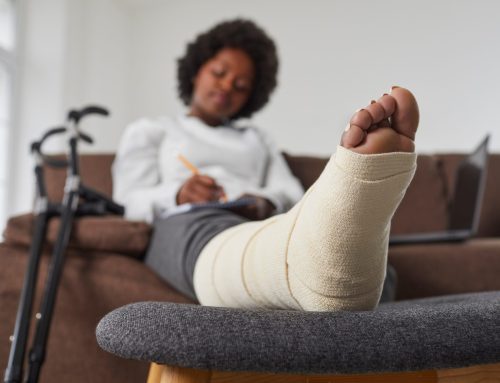
Breaking a bone can feel overwhelming. Many people immediately wonder how long a fracture takes to heal, what the fracture healing timeline looks like, and what they can do at home to support recovery. At Fracture Healing, we work with patients across Canada every day, so we understand how important clear, straightforward information is in those first days and weeks.

What Happens Right After You Break a Bone (Days 0–3)
The moment a bone breaks, your body starts the fracture recovery process. Blood vessels around the bone are damaged, and a small collection of blood, called a haematoma, forms around the break. This early environment is rich in platelets and immune cells, which release signalling molecules that help organise the healing response.
This early inflammatory phase is not just "swelling"; it can be a carefully coordinated response that helps defend the injured area, attract repair cells, and set up the conditions for new tissue to form. In the first 48–72 hours, your body may increase blood flow to the area, which can cause warmth, redness, and swelling. It may also trigger pain signals that remind you to protect and rest the injured limb, and begin forming a temporary scaffold of blood and proteins around the break to stabilise the site.
Although this stage can be uncomfortable, it often plays an important role in long-term bone healing. Inflammation in the first few days appears to support angiogenesis (new blood vessel growth) and the arrival of stem and progenitor cells that will later become bone and cartilage cells.
Days 3–7: Your Body Builds a Soft "Bridge"
As you move through the first week, the focus of acute fracture healing gradually shifts from defence to repair. Within the haematoma, specialised cells start reorganising the blood clot into a soft callus made of fibrous tissue and early cartilage.
During this time, chemotactic signals and growth factors help draw mesenchymal progenitor cells into the fracture gap, where they begin forming cartilage and supporting tissues. Angiogenic factors support the development of new blood vessels, improving oxygen and nutrient delivery to the healing bone. Key molecular pathways involved in extracellular matrix (ECM) remodelling and cell adhesion also become more active, helping cells attach, organise, and start rebuilding tissue.
This soft-callus phase is still early in the bone healing process, but the tissue "bridge" that forms may be critical for later stability and mineralisation. Many people still feel pain and limited function, but the internal repair work is already underway.
Days 7–14: Preparing for Hard Bone Formation
By the second week, the soft callus around your fracture thickens and becomes more organised. Cartilage tissue in the gap starts to mature, and the groundwork for future hard bone (hard callus) is laid down.
During this stage, osteoinductive growth factors and matrix-modifying enzymes become more prominent, supporting the transition from cartilage to early bone tissue and the first stages of mineral deposition. Signalling pathways related to ECM–receptor interaction and focal adhesion continue to guide how cells attach to the developing matrix and respond to mechanical cues such as load and movement. The balance between inflammation and repair becomes increasingly important; transient inflammatory signals can help tissue turnover, while prolonged or excessive inflammation may interfere with fine remodelling later on.
Clinically, many patients notice that sharp pain starts to lessen by the end of week two, though stiffness, tenderness, and limited mobility usually remain. The fracture is rarely strong enough for normal loading yet, but the foundations of the bone healing process are being put in place.
Why Rest, Protection, and Mechanics Matter Early On

The mechanical environment around a fresh fracture may strongly influence healing. The way a bone is stabilised and how much micro-motion occurs at the fracture site can affect immune cell behaviour, gene expression, and tissue differentiation in these early phases.
In the first two weeks, appropriate fixation and controlled loading may help support the initial haematoma and soft-callus formation, guide whether the tissue in the fracture gap becomes more fibrous, cartilaginous, or bony, and shape the interplay between mechanics and inflammation, an area sometimes described as mechano-immunomics.
This is one reason why following your healthcare provider's instructions about weight-bearing, bracing, or casting is so important for early fracture recovery. Gentle movement outside the fracture site, such as safe joint range-of-motion exercises recommended by your care team, may also support circulation and help you maintain overall function while the bone heals.
When Healing Slows: Delayed and Non-Union Fractures
While most fractures follow a predictable fracture healing timeline, some heal more slowly or fail to unite. Factors such as older age, diabetes, substance use, smoking, and certain medications are associated with higher rates of delayed healing or non-union.
On a cellular level, ongoing inflammation, impaired blood supply, or disrupted signalling pathways involved in ECM remodelling, cell proliferation, and mineralisation can all contribute to stalled repair. In these cases, patients often start asking what helps a fracture heal faster and what options exist for fracture healing without surgery.
At Fracture Healing, we work with Recovery Seekers, Performance Champions, and Recovery Advocates across Canada who are managing both acute fractures and more complex non-unions. Our goal is to support safe, non-invasive solutions that can complement medical and rehabilitative care and help patients move back toward daily activities as comfortably as possible.
How LIPUS May Support the Bone Healing Process
Low-Intensity Pulsed Ultrasound (LIPUS) is a non-invasive bone stimulation technology used in many countries as part of fresh fracture treatment and the management of delayed or non-union fractures. LIPUS therapy is designed to deliver gentle mechanical energy to the fracture site through the skin, which may influence cellular pathways involved in tissue formation and remodelling.
Based on what is known about the importance of mechanics and the early inflammatory phase, therapies that provide targeted mechanical stimulation have attracted growing interest as a way to support bone regeneration alongside standard care. In Canada, our team provides access to the Melmak LIPUS device through both rental and purchase options for patients looking for LIPUS therapy in Canada and for clinics seeking a reliable partner for bone stimulator rental in Canada.
At Fracture Healing, we work directly with patients, families, and healthcare professionals to integrate LIPUS into broader fracture recovery plans when appropriate. We help with practical questions about how long a fracture takes to heal, how LIPUS fits into the fracture healing timeline, and what to expect after breaking a bone while using home-based technology.
Our Role in Your Fracture Recovery Journey
Fracture Healing, operated by Inline Medical Inc., focuses on supporting Canadians through all stages of acute fracture healing and delayed or non-union recovery. With more than 20 years of health technology experience, we provide access to Melmak LIPUS devices for rental or purchase to support fracture healing without surgery when appropriate, guidance on device use at home as part of a comprehensive bone healing process, assistance navigating insurance including coverage options with providers such as Canada Life and Sun Life, and educational resources for patients and Recovery Advocates through our blog and other materials.
We recognise that every fracture is different, and we collaborate closely with orthopaedic surgeons, fracture clinics, sports medicine physicians, and rehabilitation professionals across Canada who are looking for evidence-informed, non-surgical options they can recommend with confidence.
FAQ: What to Expect in the First Two Weeks After a Fracture
How much pain is normal in the first two weeks?
Pain is usually most intense in the first few days, when inflammation and swelling are highest. As the soft callus begins to form and the fracture becomes more stable, many people notice a gradual decrease in sharp pain by the end of week two, though soreness and stiffness often continue. If pain suddenly worsens or you are concerned, it is important to contact your healthcare provider.
Can moving too much in the first two weeks slow healing?
Excessive or uncontrolled movement at the fracture site can disrupt the early haematoma and soft callus and may interfere with how tissues organise and mature. At the same time, controlled mechanics and appropriate stabilisation often help guide healthy bone formation. Always follow your surgeon's or fracture clinic's instructions on weight-bearing and activity during this stage.
When should I worry about delayed healing?
Delayed healing or non-union is typically diagnosed later, often several months after injury, once it becomes clear that expected progress is not occurring. However, people with risk factors such as diabetes, smoking, or osteoporosis may benefit from early conversations with their care team about additional supports. Some patients and clinicians choose to introduce technologies such as LIPUS as part of a proactive plan for what helps a fracture heal faster, especially in higher-risk cases.
Is LIPUS painful or invasive?
LIPUS is designed as a non-invasive, low-intensity therapy. The device is placed on the skin over the fracture site using a coupling medium, and treatments are typically brief and performed at home. Many patients do not feel any significant sensation during use. Your prescribing clinician and our team can review whether LIPUS is appropriate for your specific fracture and how to use the device correctly.
How do I know if LIPUS is right for my fracture?
Suitability depends on the type and location of your fracture, how it was fixed, your overall health, and whether you are dealing with an acute fracture, a delayed union, or a non-union. We encourage you to discuss options with your orthopaedic surgeon or fracture clinic. Our team can then collaborate with your healthcare provider to determine if a Melmak LIPUS device fits your treatment goals and to answer questions about access, cost, and timing.
Learn More About Fractures, Non-Medicated Healing, and LIPUS
To learn more about how LIPUS and our home-based support may fit into your fracture healing timeline, you can speak with our team. Fracture Healing is committed to helping Canadians understand their options, from fresh fracture treatment through to complex non-union care, and to working alongside you and your care team throughout recovery.